Man in a Café
Juan Gris · 1912
From $85
Printed for you, as a giclée
Art Through Time · 1907 to 1925
Cubism was the movement that, from 1907 in Paris, broke with five hundred years of perspective. Pablo Picasso and Georges Braque took apart a guitar, a bottle or a face and laid its pieces on the canvas as if seen from several sides at once. A picture no longer had to look like a window. It could be a flat surface built from facets, letters and scraps of paper.
Juan Gris, Fernand Léger, Robert Delaunay and Albert Gleizes carried it on, and by 1914 painters from Prague to Moscow to New York were working in its language.
Juan Gris · 1912
From $85
Juan Gris · 1916
From $80
Fernand Léger · 1919
From $80
Robert Delaunay · 1912
From $75
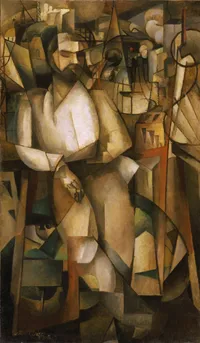
Albert Gleizes · 1912
From $95
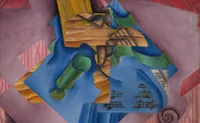
Juan Gris · 1913
From $90
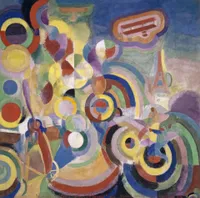
Robert Delaunay · 1914
From $70

Fernand Léger · 1913
From $80
Cubism begins in 1907, when Picasso painted Les Demoiselles d'Avignon, five women made of sharp, broken planes, and Braque saw it in his studio. That autumn Paris held a memorial exhibition of Paul Cézanne, who had told a young painter to treat nature by the cylinder, the sphere and the cone. In 1908 Braque painted the houses and trees of L'Estaque, near Marseille, as plain blocks, and when he showed them in November the critic Louis Vauxcelles wrote that he reduced everything to little cubes. Three years earlier the same critic had named the Fauves.
Its height ran from 1908 until the First World War broke up the circle in 1914, when Braque and Léger went to the front. Gris, Léger and others kept working in it into the 1920s.
In the first phase, Analytic Cubism, from about 1909 to 1912, Picasso and Braque worked so closely that their pictures can be hard to tell apart. Braque later said they were like two mountaineers roped together. They took their subjects apart into ever smaller facets, in a narrow range of brown and grey, until a portrait could almost vanish into its own structure.
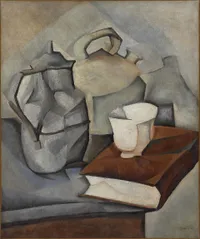
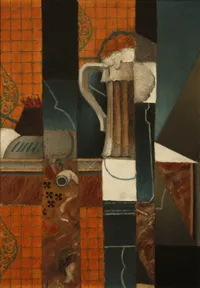
In 1912 they began to build pictures up instead. Picasso glued a piece of oilcloth printed with chair caning onto a still life, the first collage, and Braque pasted strips of wallpaper printed to look like wood: papier collé. This second phase, Synthetic Cubism, used fewer, larger and flatter shapes, brighter color and real materials. Juan Gris became its master, as in his Still Life with Newspaper of 1916, built from a few large, flat planes of color.
Juan Gris came to Paris from Madrid in 1906 and lived in the Bateau-Lavoir, the ramshackle studio building where Picasso worked. His Cubism is the clearest and most ordered, as in Man in a Café of 1912 and Violin and Glass of 1913. He died in 1927, at forty.
A second group, the Salon Cubists, showed in public while Picasso and Braque sold through a single dealer. In 1911 Albert Gleizes, Jean Metzinger, Henri Le Fauconnier, Fernand Léger and Robert Delaunay hung together in one room of the Salon des Indépendants and caused a scandal; the next year Gleizes and Metzinger wrote the first book on the movement, Du Cubisme. Léger built his figures from tubes and machine parts, as in The City of 1919. Delaunay filled Cubist structure with bright color, in his Windows Open Simultaneously of 1912; the poet Guillaume Apollinaire called this Orphism.
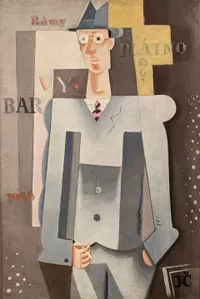
Cubism spread fast. In Prague, Bohumil Kubišta, Emil Filla and Josef Čapek made it a national style, down to its buildings and furniture. In Moscow, Kazimir Malevich and Lyubov Popova crossed it with Futurism. In New York, the Armory Show of 1913 brought it to America, with Gleizes's Man on a Balcony among the pictures. In Portugal, Amadeo de Souza-Cardoso painted it in full color before he died of the Spanish flu in 1918.
Picasso's Les Demoiselles d'Avignon (1907) and Braque's Houses at L'Estaque (1908) began it. These Cubist paintings are in our gallery:
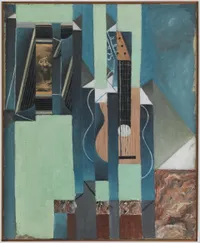
Juan Gris · 1913
From $80
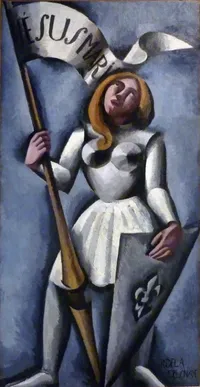
Roger de La Fresnaye · 1912
From $95
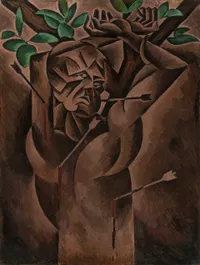
Bohumil Kubišta · 1912
From $80
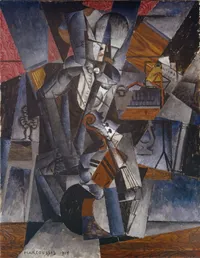
Louis Casimir Ladislas Marcoussis · 1914
From $80
Nearly every movement of the next twenty years started from it. In Italy, Futurism set Cubism's broken planes in motion. In Russia, Malevich went on to the pure shapes of Suprematism. Piet Mondrian came to Paris in 1912, passed through Cubism and came out the other side with his grids of black lines and primary color. Purism, Art Deco and abstract art all owe it their flat, built-up surfaces.
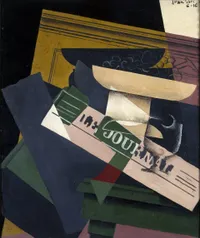
Juan Gris · 1916
From $80
Juan Gris · 1911
From $80
Juan Gris · 1913
From $85
Josef Čapek · 1920
From $85
Alfred H. Maurer · c. 1931
From $85
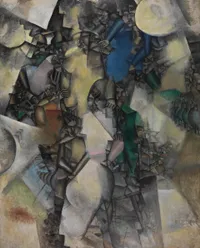
Fernand Léger · c. 1910
From $80
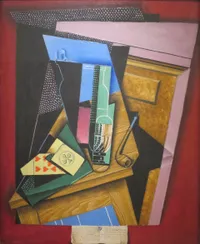
Juan Gris · 1915
From $80
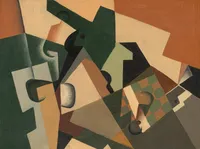
Juan Gris · c. 1917
From $80
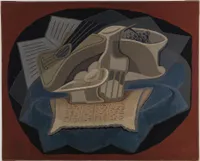
Juan Gris · 1925
From $80
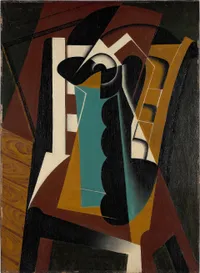
Juan Gris · 1917
From $80
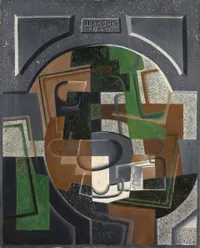
Juan Gris · 1917
From $80
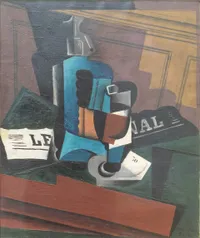
Juan Gris · 1916
From $80
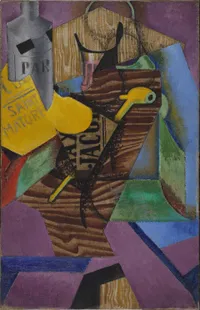
Juan Gris · 1913
From $85
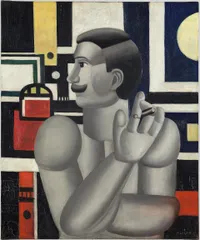
Fernand Léger · 1918
From $80
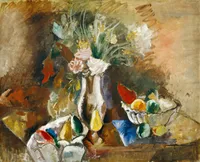
Charles Georges Dufresne · 1927/1928
From $80
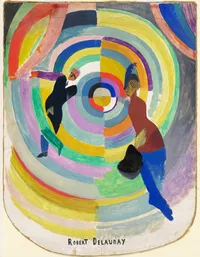
Robert Delaunay · 1914
From $80
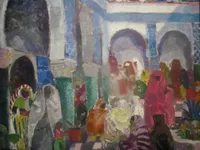
Charles Dufresne · c. 1912
From $80
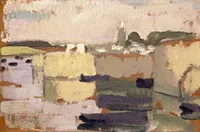
Roger de La Fresnaye · 1910
From $85
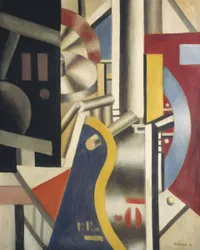
Fernand Léger · 1918
From $80
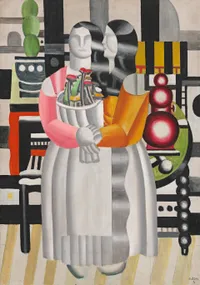
Fernand Léger · 1921
From $80
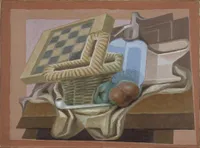
Juan Gris · 1925
From $80
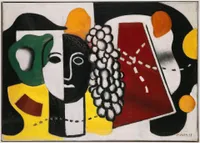
Fernand Léger · 1929
From $80
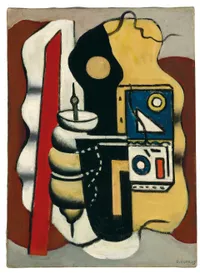
Fernand Léger · 1929
From $80
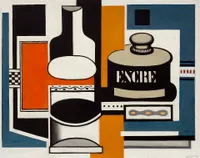
Fernand Léger · 1927
From $80
Before you explore
We use cookies for analytics, heatmaps and session recordings, so we can see what visitors love and keep making the gallery better. Anything you type stays private. You can change your choice at any time in our privacy policy.