Blue Horse I
Franz Marc · 1911
From $80
Printed for you, as a giclée
Art Through Time · 1905 to 1933
Expressionism was the movement that, from about 1905 to the 1920s, mostly in Germany and Austria, painted the world as it felt rather than as it looked. Its painters distorted bodies, faces and streets, and used violent, unnatural color, to show anxiety, longing, ecstasy and dread.
It had two great groups, Die Brücke in Dresden and Berlin and Der Blaue Reiter in Munich, and lone figures such as Egon Schiele in Vienna. Edvard Munch, a generation older, showed them the way.
Franz Marc · 1911
From $80
Ernst Ludwig Kirchner · 1913
From $80
Wassily Kandinsky · 1913
From $85
Edvard Munch · 1893
From $80
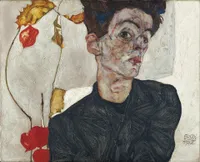
Egon Schiele · 1912
From $80
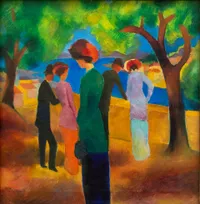
August Macke · 1913
From $70
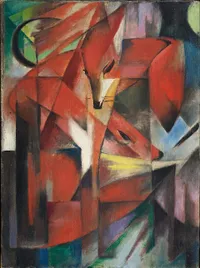
Franz Marc · 1913
From $80
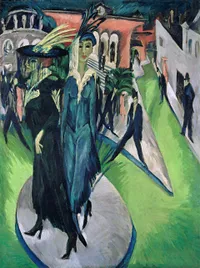
Ernst Ludwig Kirchner · 1914
From $80
On 7 June 1905, four architecture students in Dresden, Ernst Ludwig Kirchner, Erich Heckel, Karl Schmidt-Rottluff and Fritz Bleyl, founded a group they called Die Brücke, the Bridge, a bridge to the future. That same autumn the Fauves showed in Paris. In Munich in 1911, Wassily Kandinsky and Franz Marc founded Der Blaue Reiter, the Blue Rider, and the word Expressionism came into use around the same time.
The First World War broke it apart. August Macke was killed in September 1914, at twenty-seven, and Franz Marc at Verdun in 1916; Egon Schiele died of the Spanish flu in 1918, at twenty-eight. In 1937 the Nazis seized Expressionist paintings from German museums and mocked them in their exhibition of Degenerate Art. Kirchner, hundreds of whose works were taken, took his own life in Switzerland the next year.
Die Brücke painted with harsh color and angular, simplified shapes, and revived the woodcut. Its members painted nudes by the Moritzburg lakes outside Dresden, then moved to Berlin in 1911, where Kirchner painted the city's streets and its women in feathered hats, sharp-edged and nervous, as in Berlin Street Scene and Potsdamer Platz. The group broke up in 1913.
Der Blaue Reiter was more spiritual. Franz Marc painted animals in symbolic color, blue for the spiritual and yellow for the gentle, as in Blue Horse I. August Macke painted strollers, shop windows and zoos in bright, calm color, as in Woman in Green Jacket. Kandinsky wrote Concerning the Spiritual in Art in 1911 and moved step by step from landscapes at Murnau to Composition VII of 1913, among the first wholly abstract paintings. Paul Klee, Gabriele Münter, Alexej von Jawlensky and Marianne von Werefkin worked beside them.
Edvard Munch's anxious pictures of the 1890s, The Scream above all, were the movement's starting point, and he painted on into the 1940s, as in his Self-Portrait with the Spanish Flu of 1919. In Vienna, Egon Schiele drew bodies thin, twisted and exposed, and painted himself again and again, as in Self-Portrait with Physalis and its companion Portrait of Wally. In the artists' village of Worpswede, Paula Modersohn-Becker painted simple, monumental figures before she died in 1907, at thirty-one.
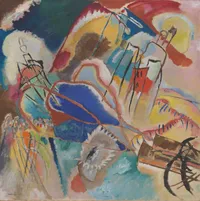
Vasily Kandinsky · 1913
From $70
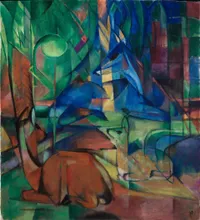
Franz Marc · 1914
From $75
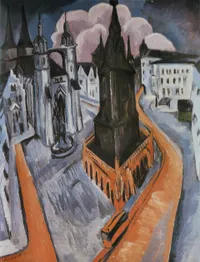
Ernst Ludwig Kirchner · 1915
From $80
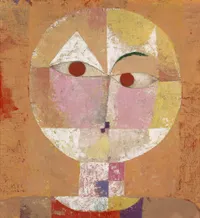
Paul Klee · 1922
From $75
In the 1920s German painters such as Otto Dix and George Grosz turned its anger into the cold, exact satire of the New Objectivity. Kandinsky and Klee taught at the Bauhaus. After the Second World War, painters in New York took its belief that a painting should carry raw feeling into Abstract Expressionism, and in the 1980s Neo-Expressionism brought its rough, violent brushwork back again.
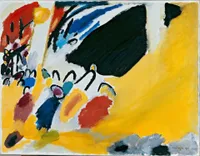
Wassily Kandinsky · 1911
From $80
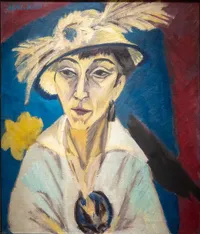
Ernst Ludwig Kirchner · 1913
From $75
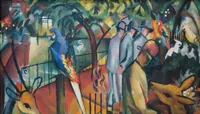
August Macke · 1912
From $95
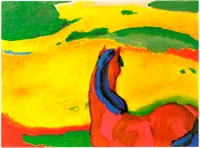
Franz Marc · 1910
From $80
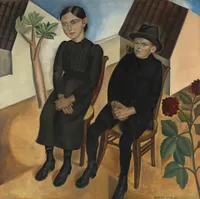
Gustave Van de Woestijne · 1923
From $70
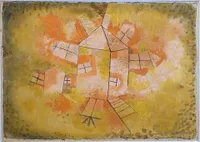
Paul Klee · 1921
From $80
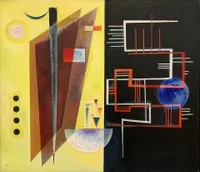
Wassily Kandinsky · 1929
From $75
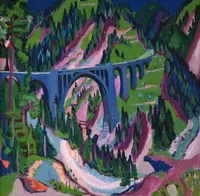
Ernst Ludwig Kirchner · 1926
From $70
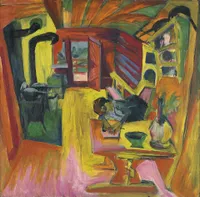
Ernst Ludwig Kirchner · 1918
From $70
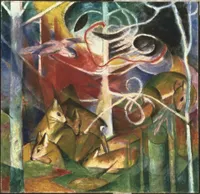
Franz Marc · 1913
From $70
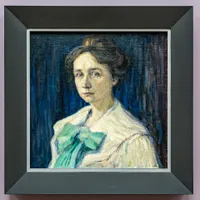
Wassily Kandinsky · 1905
From $70
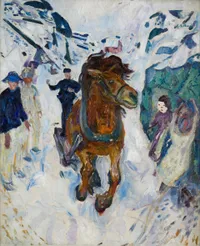
Edvard Munch · 1912
From $80
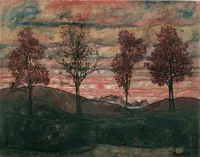
Egon Schiele · 1917
From $80
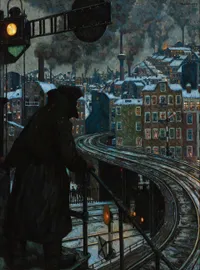
Hans Baluschek · 1920
From $80
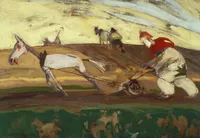
Witold Wojtkiewicz · 1905
From $85
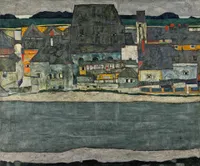
Egon Schiele · 1914
From $80
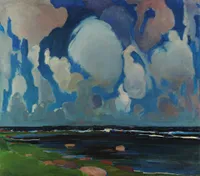
Konrad Krzyżanowski · 1908
From $75
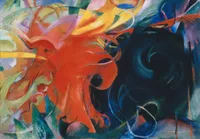
Franz Marc · 1914
From $85
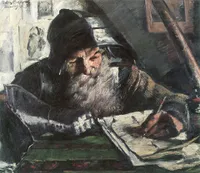
Lovis Corinth · 1917
From $75
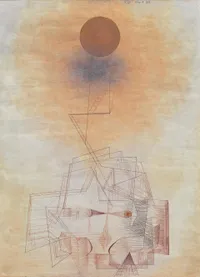
Paul Klee · 1927
From $80
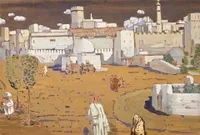
Wassily Kandinsky · 1905
From $85
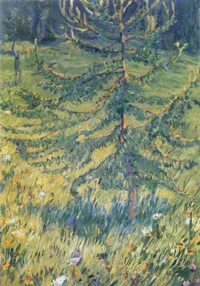
Franz Marc · 1908
From $80

Lovis Corinth · 1917
From $85
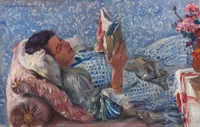
Lovis Corinth · 1911
From $90
Before you explore
We use cookies for analytics, heatmaps and session recordings, so we can see what visitors love and keep making the gallery better. Anything you type stays private. You can change your choice at any time in our privacy policy.