The Oath of the Horatii
Jacques-Louis David · 1784
From $80
Printed for you, as a giclée
Art Through Time · 1760 to 1830
Neoclassicism was the return to the art of ancient Greece and Rome, from about 1760 to 1830: clear outlines, calm and noble figures, and stern stories of duty and sacrifice. It answered the playful Rococo, and in France it became the art of the Revolution and of Napoleon.
Its leading painter was Jacques-Louis David; after him came his pupil Jean-Auguste-Dominique Ingres, and, across Europe, Anton Raphael Mengs, Angelica Kauffman, Pompeo Batoni and Benjamin West.
Jacques-Louis David · 1784
From $80
Jacques-Louis David · 1793
From $80
Jacques Louis David · 1787
From $85
Jacques-Louis David · 1802
From $75
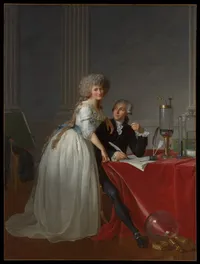
Jacques Louis David · 1788
From $80
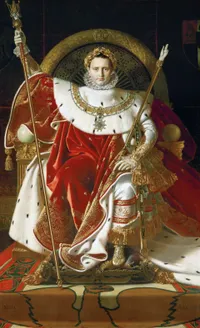
Jean-Auguste-Dominique Ingres · 1806
From $90
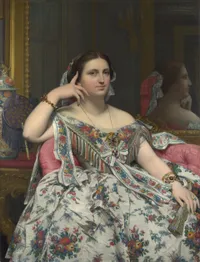
Jean-Auguste-Dominique Ingres · 1856
From $80
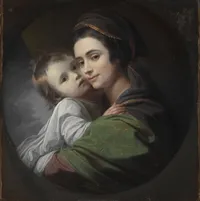
Benjamin West · c. 1770
From $70
It begins in Rome in the 1750s and 1760s, as the excavations at Herculaneum, from 1738, and Pompeii, from 1748, brought ancient painting and objects back into the light. In 1755 the German scholar Johann Joachim Winckelmann urged artists to imitate the Greeks, whose art he praised for its noble simplicity and quiet grandeur.
It reached its height with David's The Oath of the Horatii, painted in Rome in 1784 and shown in Paris in 1785, and it lasted until about 1830, when Ingres was still painting smooth, clear portraits and Romanticism had already taken the young.
David was a revolutionary as well as a painter. He voted for the execution of Louis XVI, and in 1793 he painted his murdered friend, the journalist Jean-Paul Marat, slumped in his bath, holding the letter his killer used to gain entry: The Death of Marat, a modern martyr painted like a Christ taken from the cross.
Under Napoleon he became the first painter of the empire. Napoleon Crossing the Alps shows him calm on a rearing horse; in fact he crossed on a mule. Ingres painted Napoleon I on His Imperial Throne in 1806 like a god in an ancient temple. In London, Angelica Kauffman and Benjamin West, both founding members of the Royal Academy in 1768, carried the style into British history painting.
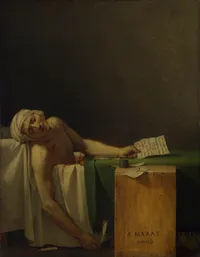
Jacques-Louis David · 1793
From $80
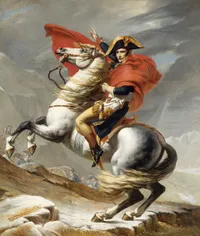
Jacques-Louis David · 1802
From $75
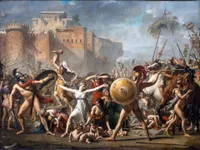
Jacques-Louis David · 1799
From $80
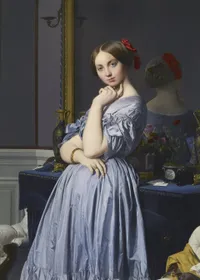
Jean-Auguste-Dominique Ingres · 1845
From $80
Romanticism. Even David's own pupils, Antoine-Jean Gros among them, were drawn to color, motion and feeling, and Géricault and Delacroix turned the Salon into a contest between line and color. In the academies, Neoclassical rules lived on for the rest of the century as academic art.
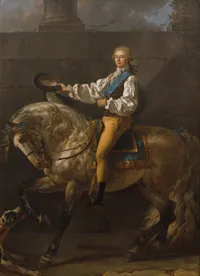
Jacques-Louis David · 1780
From $80
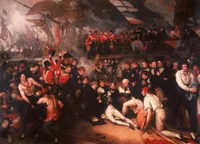
Benjamin West · 1806
From $80
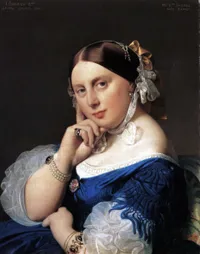
Jean-Auguste-Dominique Ingres · 1859
From $80
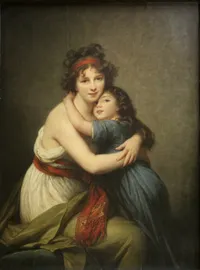
Élisabeth Louise Vigée Le Brun · 1789
From $80
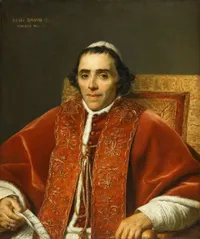
Jacques-Louis David · 1805
From $80
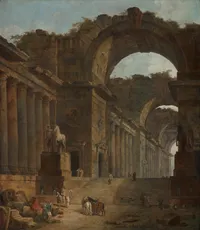
Hubert Robert · 1787–88
From $75
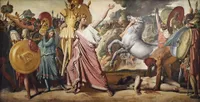
Jean-Auguste-Dominique Ingres · 1812
From $100
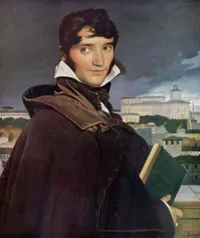
Jean-Auguste-Dominique Ingres · 1807
From $80
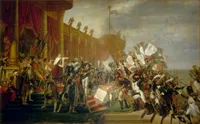
Jacques-Louis David · 1810
From $90

John Vanderlyn · 1847
From $85
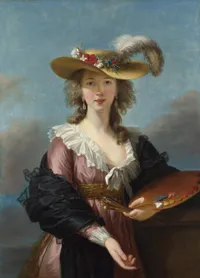
Élisabeth Louise Vigée Le Brun · 1782
From $80
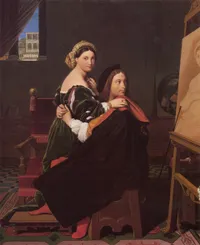
Jean-Auguste-Dominique Ingres · 1814
From $80
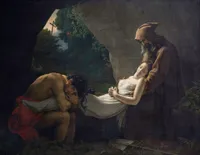
Anne-Louis Girodet · 1808
From $80
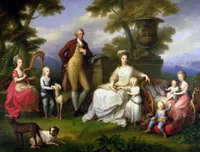
Angelica Kauffmann · 1782
From $80
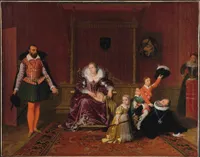
Jean-Auguste-Dominique Ingres · 1817
From $80
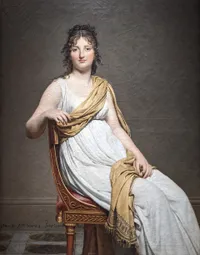
Jacques-Louis David · 1799
From $80
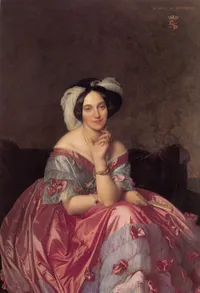
Jean-Auguste-Dominique Ingres · 1848
From $85
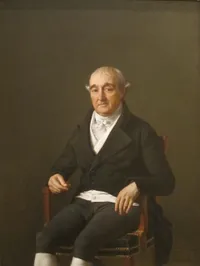
Jacques-Louis David · 1802
From $80
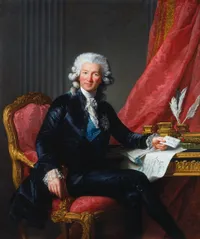
Élisabeth Louise Vigée Le Brun · 1784
From $80
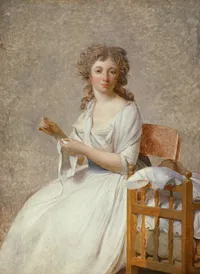
Jacques Louis David · 1791–92
From $80
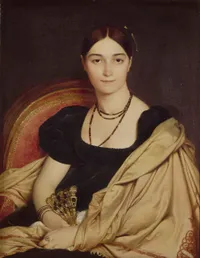
Jean-Auguste-Dominique Ingres · 1807
From $80
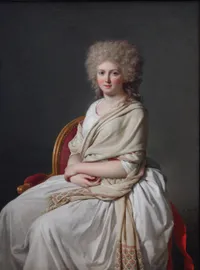
Jacques-Louis David · 1790
From $80

Élisabeth Louise Vigée Le Brun · 1790
From $80

Benjamin West · c. 1816
From $80
Before you explore
We use cookies for analytics, heatmaps and session recordings, so we can see what visitors love and keep making the gallery better. Anything you type stays private. You can change your choice at any time in our privacy policy.