Isle of the Dead
Arnold Böcklin · 1883
From $95
Printed for you, as a giclée
Art Through Time · 1880 to 1910
Symbolism was the movement that, from the 1880s to about 1910, turned painting inward, toward dreams, myth, desire, death and the soul. Where the Impressionists painted what the eye saw, the Symbolists painted what the mind saw with its eyes closed: sphinxes and sirens, islands of the dead, women as goddesses or as fate.
It had no single style. Gustave Moreau and Odilon Redon in France, Arnold Böcklin in Switzerland, Fernand Khnopff in Belgium, Edvard Munch in Norway and Gustav Klimt in Vienna all belonged to it, each in his own way.
Arnold Böcklin · 1883
From $95
Gustave Moreau · 1876
From $85
Edvard Munch · 1893
From $80
Gustav Klimt · 1907
From $70
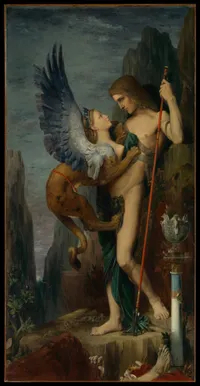
Gustave Moreau · 1864
From $95
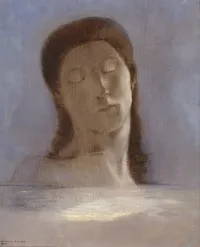
Odilon Redon · 1890
From $80
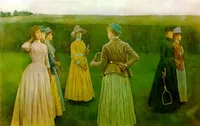
Fernand Khnopff · 1889
From $90
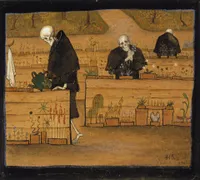
Hugo Simberg · 1896
From $75
The name came from poetry. On 18 September 1886, the poet Jean Moréas published a manifesto in Le Figaro that gave the Symbolists theirs: art should clothe an idea in a form the senses can feel, never state it plainly. The poets Charles Baudelaire, Stéphane Mallarmé and Paul Verlaine were its heroes, and painters had been working toward the same thing for twenty years.
Gustave Moreau made his name at the Salon of 1864 with Oedipus and the Sphinx, the monster clinging to the hero's chest. In 1884 the novelist Joris-Karl Huysmans gave the movement its bible, Against Nature, whose hero gazes for hours at Moreau's Salome and at Odilon Redon's drawings. By the 1890s Symbolist painters were showing in Paris, Brussels, Vienna, Munich, Kraków and Helsinki, and the movement faded only when the Expressionists and Cubists swept in after 1905.
In Paris, Moreau painted jeweled scenes from myth, among them The Apparition, where the head of John the Baptist hangs glowing in the air before Salome. Odilon Redon drew in charcoal for twenty years, eyes and spiders and floating heads he called his blacks, then turned in the 1890s to color, as in Les Yeux clos, a face with its eyes closed rising over the sea. Pierre Puvis de Chavannes painted calm, pale murals, and Paul Gauguin and the young Nabis called their own flat color Synthetism.
In Switzerland, Arnold Böcklin painted Isle of the Dead five times between 1880 and 1886: a boat carrying a figure in white toward a rocky island of cypresses. Rachmaninoff wrote a tone poem on it in 1909. In Brussels, Fernand Khnopff painted his sister Marguerite as all seven women of Memories, and James Ensor filled Christ's Entry into Brussels in 1889 with a crowd in masks.
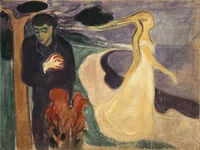
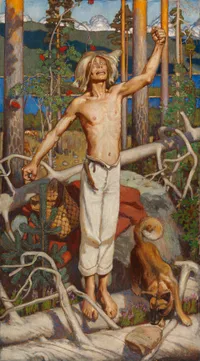
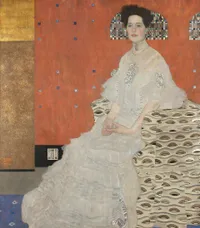
Further north, Edvard Munch painted love, anxiety and death in his Frieze of Life, with The Scream of 1893 at its heart. In Finland, Akseli Gallen-Kallela painted the legends of the Kalevala, as in Lemminkäinen's Mother, and Hugo Simberg painted skeletons tending flowers in The Garden of Death. In Vienna, Gustav Klimt and the Secession, founded in 1897, carried Symbolism into gold leaf and pattern.
Hugo Simberg · 1896
From $75
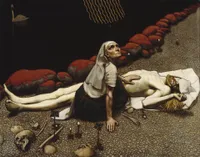
Akseli Gallen-Kallela · 1897
From $80
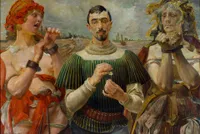
Jacek Malczewski · 1903
From $85
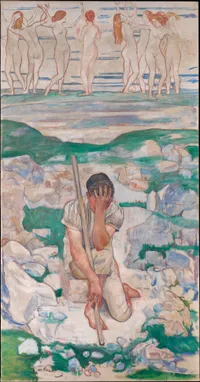
Ferdinand Hodler · 1896
From $95
Its inner world went on in two directions. Munch's anxiety and Ensor's masks led straight to Expressionism, feeling painted from the inside out. Its dreams went underground and came back after the First World War as Surrealism: Giorgio de Chirico admired Böcklin, and the Surrealists claimed Moreau and Redon as their ancestors. Its long, curving lines and stylized women live on in Art Nouveau, its twin in the decorative arts.
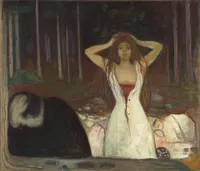
Edvard Munch · 1894
From $75

Edvard Munch · 1890
From $80
Edvard Munch · 1896
From $80

August Strindberg · 1903
From $95
Akseli Gallen-Kallela · 1899
From $95
Henri Fantin-Latour · 1877
From $80

Richard Bergh · 1899
From $80
Gustav Klimt · 1906
From $75
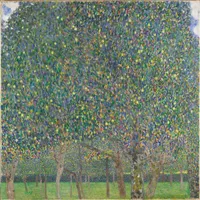
Gustav Klimt · 1903
From $70
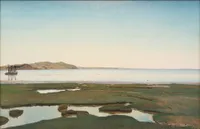
Laurits Andersen Ring · 1900
From $85
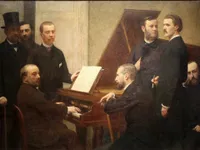
Henri Fantin-Latour · 1885
From $80
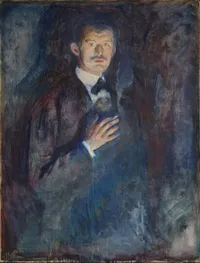
Edvard Munch · 1895
From $80
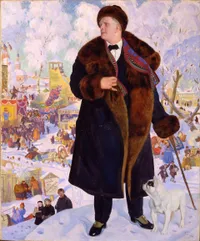
Boris Kustodiev · c. 1921
From $80
Viktor Vasnetsov · 1880
From $95
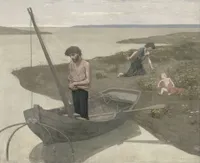
Pierre Puvis de Chavannes · 1881
From $80
.jpg&w=200)
Fernand Khnopff · 1885
From $70
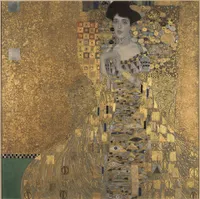
Gustav Klimt · 1907
From $70
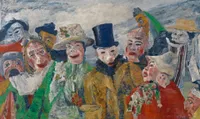
James Ensor · 1880
From $90
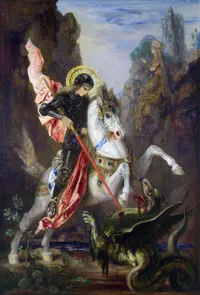
Gustave Moreau · c. 1880
From $85
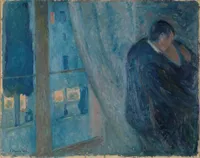
Edvard Munch · 1892
From $80
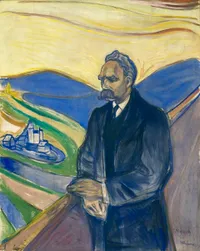
Edvard Munch · 1906
From $80
Boris Kustodiev · 1918
From $70
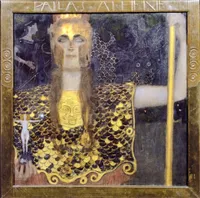
Gustav Klimt · 1899
From $70
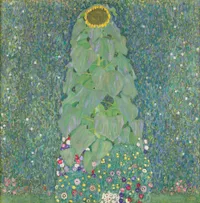
Gustav Klimt · c. 1907
From $70
Before you explore
We use cookies for analytics, heatmaps and session recordings, so we can see what visitors love and keep making the gallery better. Anything you type stays private. You can change your choice at any time in our privacy policy.