Arnolfini Portrait
Jan van Eyck · 1434
From $80
Printed for you, as a giclée
Art Through Time · 1420 to 1600
The Northern Renaissance was the Renaissance north of the Alps, in Flanders, the Netherlands, Germany and France, from the 1420s to about 1570. Where Florence rebuilt art from ancient Rome, painters in Bruges, Antwerp and Nuremberg built it from close looking: oil paint laid in thin, glowing layers, every hair, jewel and reflection set down as if under a magnifying glass.
Its painters were Jan van Eyck and Rogier van der Weyden in Flanders, Hieronymus Bosch in the Netherlands, Albrecht Dürer and Hans Holbein in Germany, and, at its end, Pieter Bruegel the Elder.
Jan van Eyck · 1434
From $80
Pieter Brueghel the Elder · 1565
From $80
Hans Holbein the Younger · 1533
From $70
Albrecht Dürer · 1500
From $80
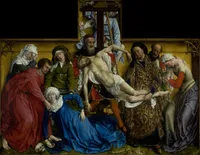
Rogier van der Weyden · c. 1440
From $80

Pieter Brueghel the Elder · 1551
From $80
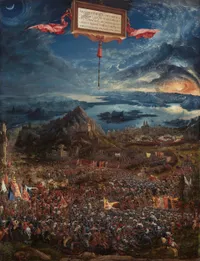
Albrecht Altdorfer · 1529
From $80
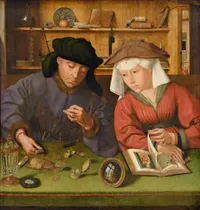
Quinten Metsys · 1514
From $70
It begins in the 1420s and 1430s in the cities of Flanders, then ruled by the rich Dukes of Burgundy. Jan van Eyck, court painter to Duke Philip the Good, finished the Ghent Altarpiece with his brother Hubert in 1432 and painted the Arnolfini Portrait in Bruges in 1434. On the wall above the mirror he wrote, in Latin, "Jan van Eyck was here."
Around 1500 the north and the south met. Albrecht Dürer of Nuremberg crossed the Alps to Venice twice and brought back Italian proportion and perspective, while Italian painters studied Flemish oil technique. From 1517 Martin Luther's Reformation changed what painters were asked for in Germany and the Netherlands: fewer altarpieces, more portraits, landscapes and scenes of daily life. Bruegel's death in 1569 closed its great age, and by 1600 northern painters were turning to the Baroque.
The Italians worked from rules: perspective, anatomy and the proportions of ancient statues, often in fresco on church walls. The northern painters worked from observation, mostly on wooden panels in oil, a medium Jan van Eyck mastered so completely that Giorgio Vasari, a century later, credited him with inventing it. He didn't, but no one before him had used it so well.
Their patrons were different too: dukes, bankers and merchants who wanted portraits and altarpieces for their own chapels, with themselves kneeling in them. Rogier van der Weyden's The Descent from the Cross, painted for the crossbowmen's guild of Leuven, is all grief, with its figures pressed into a shallow golden box like carved and painted sculpture.
Hieronymus Bosch, in the Dutch town of 's-Hertogenbosch, painted heaven, earth and hell crowded with strange creatures, most famously in The Garden of Earthly Delights. Albrecht Dürer, who drew and painted himself more often than any artist before him, faced the viewer head-on in his Self-Portrait with Fur-Trimmed Robe of 1500, posed like an image of Christ. Hans Holbein the Younger, court painter to Henry VIII, hid a stretched skull across the floor of The Ambassadors, visible only from the side.
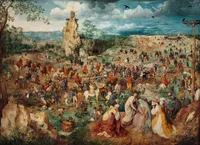
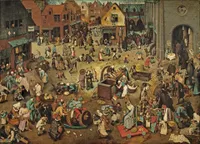
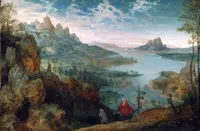
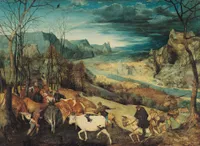
In Antwerp, Joachim Patinir made landscape a subject of its own, and Dürer called him a good landscape painter. Pieter Bruegel the Elder painted peasants, proverbs and the seasons for Antwerp's merchants. His The Hunters in the Snow of 1565 is one of a series on the months of the year, and his Netherlandish Proverbs packs more than a hundred sayings into one village.
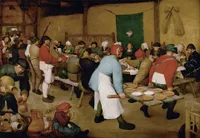
Pieter Brueghel the Elder · 1567
From $85
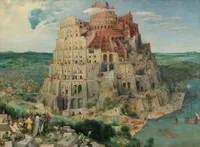
Pieter Brueghel the Elder · 1563
From $80
Quinten Metsys · 1514
From $70
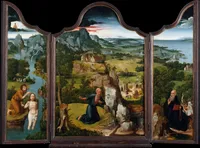
Joachim Patinir · ca. 1515
From $80
When the Netherlands split in the 1580s, its art split too. In the Catholic south, Peter Paul Rubens carried Flemish painting into the Baroque. In the Protestant north, the new Dutch Republic turned the northern love of detail, light and daily life into the Dutch Golden Age of Rembrandt and Vermeer.

Pieter Brueghel the Elder · 1565
From $85
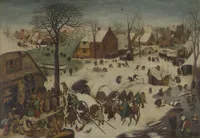
Pieter Brueghel the Elder · 1566
From $85

Jan van Eyck · c. 1435
From $85
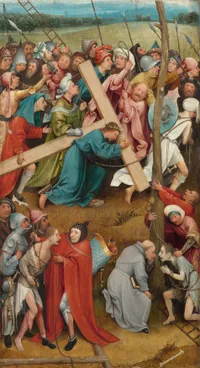
Hieronymus Bosch · Undated (1450–1516)
From $95

Hieronymus Bosch · c. 1503
From $80
Pieter Brueghel the Elder · 1564
From $80
Pieter Brueghel the Elder · 1559
From $80
Pieter Brueghel the Elder · 1563
From $85
Pieter Brueghel the Elder · 1565
From $80
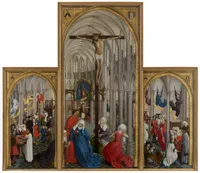
Rogier van der Weyden · 1440
From $75
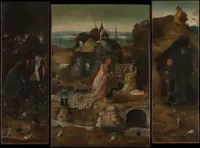
Hieronymus Bosch · 1493
From $80

Pieter Brueghel the Elder · 1565
From $80
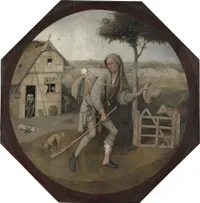
Hieronymus Bosch · 1494
From $70
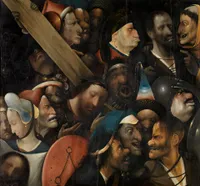
Hieronymus Bosch · c. 1515
From $75
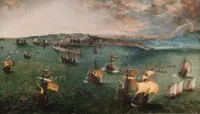
Pieter Brueghel the Elder · 1554
From $95
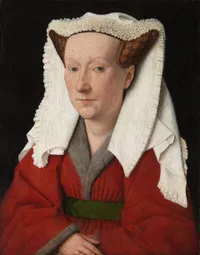
Jan van Eyck · 1439
From $80
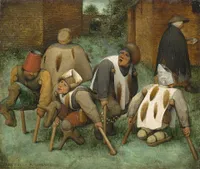
Pieter Brueghel the Elder · 1568
From $75
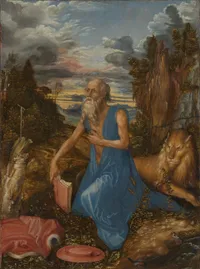
Albrecht Dürer · 1496
From $80
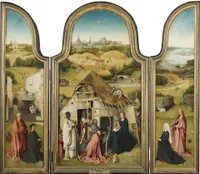
Hieronymus Bosch · 1494
From $75
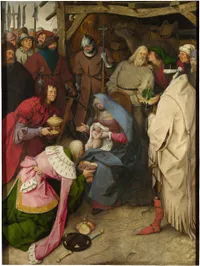
Pieter Brueghel the Elder · 1563
From $80
Pieter Brueghel the Elder · Undated (1525–1569)
From $85
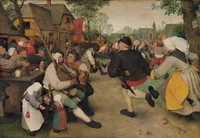
Pieter Brueghel the Elder · 1568
From $85
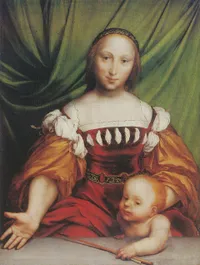
Hans Holbein the Younger · 1526
From $80
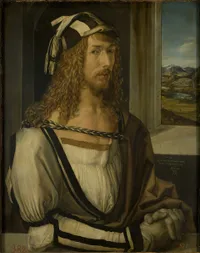
Albrecht Dürer · 1498
From $80
Before you explore
We use cookies for analytics, heatmaps and session recordings, so we can see what visitors love and keep making the gallery better. Anything you type stays private. You can change your choice at any time in our privacy policy.